Intro
PowerShell has always supported Basic authentication on Invoke-WebRequest and Invoke-RestMethod via the -Credential parameter. Those of you who have tried to use it on any modern APIs are probably scratching you head at what I just wrote. You probably know full well that the -Credential parameter is not sending Basic Authentication credentials when you expect it to. But it's true, Basic authentication has been there all along. The problem is that PowerShell will only send credentials if challenged.
This is a problem for accessing modern API's, especially for requesting OAuth Tokens from authentication endpoints. Modern APIs often do not issue 401 status codes with WWW-Authenticate headers. This results in the Web Cmdlets not issuing credentials to the remote server even though they were supplied. Modern API's expect you to present your credentials explicitly without being challenged first. This has resulted in a common frustration and feature request.
Additionally, the Web Cmdlets did not have any native support for OAuth bearer tokens. This means that all calls to APIs requiring OAuth tokens required passing an Authorization header. Since many OAuth grant flows require the client ID and client secret be sent as Basic authentication without a challenge, the entire OAuth process becomes a manual task.
I have run into this myself with the PSRAW and PSMSGraph projects. In both projects I have created wrapper functions around Invoke-WebRequest and Invoke-RestMethod that provide OAuth capabilities and handle the conversion of PSCredential to Basic Authentication. I have long wish this functionality was native to the cmdlets.
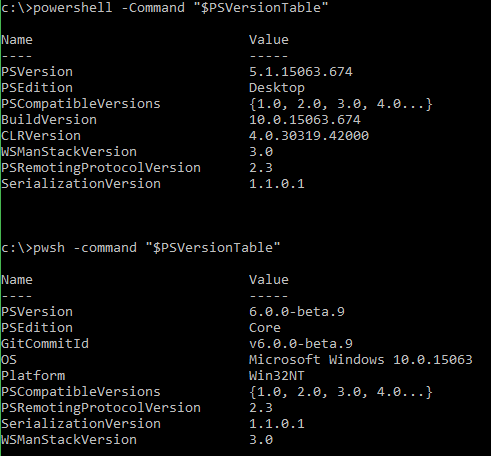
I'm pleased to announce that beginning with PowerShell Core 6.0.0-Beta.9, Invoke-WebRequest and Invoke-RestMethod natively support explicit Basic and OAuth authentication.
If you want this functionality now, build the current master branch or pickup the nightly build. this was added in Pull Request #5052.